
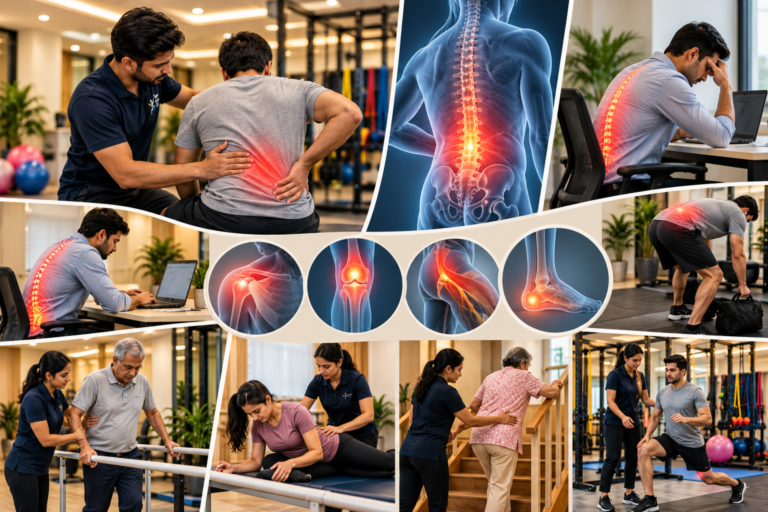
Shoulder pain gets dismissed more than almost any other joint complaint. People assume it’ll settle on its own, keep working through it, and by the time they come in, the rotator cuff has often been compensating for weeks — which makes recovery take longer than it would have if they’d come in early.
Rest alone rarely resolves a rotator cuff issue, and sometimes makes it worse by letting the surrounding muscles stiffen further. A few signs point clearly toward needing proper treatment rather than waiting it out: pain that wakes you up at night when you roll onto that side, a noticeable loss of range when reaching overhead or behind your back, and a dull ache that lingers even at rest rather than only during movement.
Weakness is another marker people miss. If lifting a bag or reaching for something on a high shelf suddenly feels harder on one side, that’s often the rotator cuff struggling to do its job, not just soreness.


We start with TOP MAP to assess the shoulder’s actual movement pattern — not just where it hurts, but how the shoulder blade, upper back, and neck are compensating around the injury. A lot of rotator cuff pain has a secondary contributor sitting in the thoracic spine or scapular control, and missing that usually means the pain comes back once someone returns to normal activity.
Early treatment focuses on reducing pain and restoring basic movement without aggravating the tear further. As that improves, we shift into strengthening the rotator cuff muscles specifically, along with the scapular stabilisers that support them — this is the stage most generic treatment plans skip, and it’s often why shoulder pain recurs within a few months of stopping therapy elsewhere.
For patients managing a partial tear without surgery, this staged approach — pain control, then controlled movement, then progressive strengthening — tends to produce solid functional recovery over six to eight weeks. Post-surgical rotator cuff repairs follow a similar structure but with a longer, more conservative early phase to protect the healing tissue. If shoulder pain has been sitting in the background for a few weeks already, it’s worth getting assessed before it becomes a longer problem.
Areas we serve near Sector 104, Noida: Sector 100, Sector 101, Sector 102, Sector 105, Sector 107, Sector 108, Sector 82, Sector 93, Hajipur, near Jaypee Hospital, near Sector 81 Metro Station.
Related reading: Best physiotherapist near me in Sector 104 · What is TOP MAP? · Neck pain from screen time
A modern physiotherapy and rehabilitation center in Noida specializing in pain relief, post-surgical rehabilitation, sports injuries, posture correction, neurological rehabilitation, and functional recovery.
Physiotherapy Consultation
Pain Management
Sports Injury Rehabilitation
Orthopedic Rehabilitation
Neurological Rehabilitation
Post-Surgical Rehabilitation
Posture Correction
Dry Needling
Kinesio Taping
Home Physiotherapy
Advanced Rehab Hall
Functional Training Zone
Posture Assessment Lab
Electrotherapy Unit
Manual Therapy Section
Multi-Bed Treatment Area
Strength & Balance Training
Gait Training Programs
Monday – Saturday
9:00 AM – 8:00 PM
Sunday
By Appointment Only
Emergency Consultation Available
© 2026 The Ordinary Physio. All Rights Reserved.
WhatsApp us