Uncategorized

Uncategorized

TOP MAP: How We Assess Movement | The Ordinary Physio

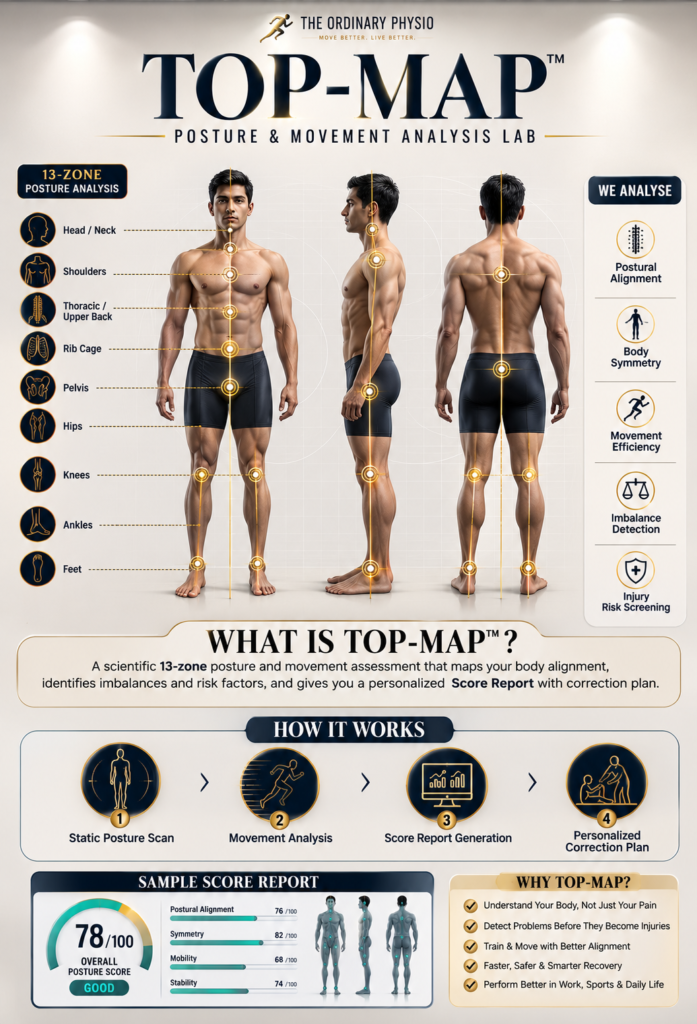
When you tell a physiotherapist “my knee hurts”, you are describing where you feel the problem. Where it starts can be somewhere else: a stiff ankle, a weak hip, a back that has stopped rotating. TOP MAP, short for The Ordinary Physio Movement Analysis Protocol, is the assessment we run before any treatment begins. It exists so the plan is built on what we measure and observe, not on the label that came with your prescription. Why we use a protocol instead of winging it In a busy clinic the pull is always towards treating first and thinking later. A protocol takes that pull away. Every patient gets the same core questions and measurements, so we can repeat them in week three and week six and show you what changed, instead of telling you that you look better. What happens in a TOP MAP assessment We start with your story. When it began, what makes it worse, what eases it, what your work and weekends look like, what scans you have had and what medicines you take. This is also where we screen for anything that should not be treated in a physiotherapy clinic and needs a doctor first. You stand in front of a gridded backdrop and we photograph you from the front, side and back. We look at how your head, shoulders, pelvis, knees and feet line up. The grid gives us a fixed reference, so a later set of photos can be compared directly with the first. We watch you move. Squatting, stepping up, balancing on one leg, reaching overhead, getting out of a chair, walking. Pain often changes how you move long before it changes how you stand. We test by hand. Joint range with a goniometer, strength in the key muscle groups, muscle length and, where your symptoms call for it, reflexes and sensation. We add tests that match your goal. A runner gets hopping and landing tasks. Someone recovering from a knee replacement gets a timed sit-to-stand and a stair test. An older adult gets balance and walking-speed tests. From findings to a plan Once the tests are done we put them together into a working explanation of why you hurt, in plain language. Front-of-knee pain is a good example. When someone with it does a single-leg squat, the knee often drifts inward while the hip on that side drops. That points towards hip strength and control as part of the problem, so the plan includes the hip and not just the knee. You leave the first visit with a short written plan: the first two or three goals, how often we suggest seeing you, the home exercises to start, and when we will repeat the key tests. Plan for around 45 to 60 minutes for the first visit. What TOP MAP cannot do It does not replace an X-ray or MRI when one is needed. Posture photos show alignment, not the cause of pain, and plenty of people with uneven shoulders or a tilted pelvis have no pain at all. We treat the photos as one input among several. If the assessment turns up something that needs a scan or a specialist opinion, we will say so and not carry on treating regardless. Who benefits most Anyone whose pain has lasted more than a couple of weeks, people recovering from surgery, athletes returning to sport, desk workers with recurring neck or back pain, and older adults worried about balance. If your problem is new, mild and clearly tied to one event, you may need less than this. We will tell you. Frequently Asked Questions Is TOP MAP a scan with a machine? No. It is a structured clinical assessment: a measured posture grid with photographs, movement screening and hands-on testing. There is no radiation and no scanner involved.   Do I need an X-ray or MRI before I come? No. Bring any reports you already have, but most muscle and joint problems can be assessed without imaging. We will tell you if a scan would change the plan.   How often is it repeated? We repeat the key measurements at set points, usually every few weeks or at the end of a package, so you can see change on paper and not only feel it.   Book a first assessment Message us on WhatsApp or call +91 87508 81002. The clinic is on the ground floor at Gu-03, Gali Number 6, Sector 104, Noida 201301, near Mithaas Restaurant, with parking and a female physiotherapist available on request. Related reading: What to expect at your first physiotherapy consultation · Back pain physiotherapy in Noida · Posture correction in Noida · Our services Areas we serve from Sector 104: Sector 100, Sector 101, Sector 102, Sector 105, Sector 107, Sector 108, Sector 82, Sector 93, Hajipur. This article is general information, not a diagnosis.


Uncategorized

Knee pain physiotherapy near me in Noida — causes and treatment options

Knee pain physiotherapy near me in Noida — causes and treatment options Knee pain is confusing to self-diagnose, and that’s part of why so many people end up in the wrong treatment for months. The pain often shows up at the front of the knee, but the actual cause can be sitting in the hip, the ankle, or the kneecap tracking pattern — which is exactly why a proper assessment matters more here than with most other joints. Chondromalacia patellae — symptoms and physiotherapy treatment One of the most common knee conditions we see is chondromalacia patellae, where the cartilage under the kneecap softens and wears, usually from the kneecap not tracking correctly as the knee bends. It tends to show up as a dull ache at the front of the knee that worsens with stairs, squatting, or sitting for long periods with the knee bent — the classic “theatre sign” where pain builds after sitting through a movie. Treatment focuses on correcting what’s actually causing the poor tracking, which is often weakness in the hip muscles rather than anything wrong with the knee itself. Strengthening the glutes and outer hip, combined with targeted quadriceps work, usually reduces the pain significantly over four to six weeks, without needing injections or surgery in most cases. When knee pain needs a physiotherapist versus an orthopedic surgeon Most knee pain — chondromalacia, mild ligament strains, early-stage osteoarthritis, tendon irritation — responds well to physiotherapy alone. Surgery becomes the more likely path when there’s a complete ligament rupture with instability, a locked knee from a meniscus tear, or imaging that shows significant structural damage. Even then, physiotherapy usually comes first as a trial, and almost always follows afterward regardless of whether surgery happens. A reasonable rule of thumb: if the knee is swollen, locking, or genuinely unstable when you put weight on it, get it imaged before starting treatment. If it’s an ache that comes and goes with activity, physiotherapy assessment is the right first step. At The Ordinary Physio, we use TOP MAP to check how the hip, knee, and ankle move together before deciding on a plan — since treating the knee in isolation, without looking at what’s above and below it, is one of the more common reasons knee pain keeps coming back. Areas we serve near Sector 104, Noida: Sector 100, Sector 101, Sector 102, Sector 105, Sector 107, Sector 108, Sector 82, Sector 93, Hajipur, near Jaypee Hospital, near Sector 81 Metro Station. Related reading: ACL tear physiotherapy in Noida · Meniscus injury physiotherapy in Noida · What is TOP MAP?

Uncategorized

Best Physiotherapist for Shoulder pain in Sector 104 Noida — what actually works

Best Physiotherapist for Shoulder pain in Sector 104 Noida — what actually works Shoulder pain gets dismissed more than almost any other joint complaint. People assume it’ll settle on its own, keep working through it, and by the time they come in, the rotator cuff has often been compensating for weeks — which makes recovery take longer than it would have if they’d come in early. Signs your shoulder pain needs physiotherapy, not just rest Rest alone rarely resolves a rotator cuff issue, and sometimes makes it worse by letting the surrounding muscles stiffen further. A few signs point clearly toward needing proper treatment rather than waiting it out: pain that wakes you up at night when you roll onto that side, a noticeable loss of range when reaching overhead or behind your back, and a dull ache that lingers even at rest rather than only during movement. Weakness is another marker people miss. If lifting a bag or reaching for something on a high shelf suddenly feels harder on one side, that’s often the rotator cuff struggling to do its job, not just soreness. Our rotator cuff rehabilitation approach We start with TOP MAP to assess the shoulder’s actual movement pattern — not just where it hurts, but how the shoulder blade, upper back, and neck are compensating around the injury. A lot of rotator cuff pain has a secondary contributor sitting in the thoracic spine or scapular control, and missing that usually means the pain comes back once someone returns to normal activity. Early treatment focuses on reducing pain and restoring basic movement without aggravating the tear further. As that improves, we shift into strengthening the rotator cuff muscles specifically, along with the scapular stabilisers that support them — this is the stage most generic treatment plans skip, and it’s often why shoulder pain recurs within a few months of stopping therapy elsewhere. For patients managing a partial tear without surgery, this staged approach — pain control, then controlled movement, then progressive strengthening — tends to produce solid functional recovery over six to eight weeks. Post-surgical rotator cuff repairs follow a similar structure but with a longer, more conservative early phase to protect the healing tissue. If shoulder pain has been sitting in the background for a few weeks already, it’s worth getting assessed before it becomes a longer problem. Areas we serve near Sector 104, Noida: Sector 100, Sector 101, Sector 102, Sector 105, Sector 107, Sector 108, Sector 82, Sector 93, Hajipur, near Jaypee Hospital, near Sector 81 Metro Station. Related reading: Best physiotherapist near me in Sector 104 · What is TOP MAP? · Neck pain from screen time

Uncategorized

Back pain physiotherapy in Noida — causes, treatment, and recovery timeline

Back pain physiotherapy in Noida — causes, treatment, and recovery timeline Back pain is the single most common complaint we see at The Ordinary Physio, and most of it isn’t coming from an injury at all. It’s coming from years of sitting badly, moving too little, and a body that’s slowly stopped doing what it used to. Common causes of back pain in desk workers If you work a desk job in Noida — and a large share of our patients do — the pattern is usually familiar. Hours in a chair, often leaning forward toward a screen, weakens the muscles that support the spine while the hip flexors tighten up from staying in one position. Over months, that combination shifts how the lower back handles load, and eventually something as ordinary as picking up a bag or bending to tie a shoe sets off real pain. Poor sitting posture compounds it. Most office chairs don’t support the natural curve of the lower spine, and most people don’t correct for it. Add a long commute spent sitting in a car or cab, and the spine barely gets a break between the office and home. There’s also a smaller group of cases with a clearer structural cause — a disc bulge, sciatica, or spondylosis — which usually comes with more specific symptoms like pain radiating down a leg or numbness. These need a more targeted assessment, but they’re still treatable through physiotherapy in most cases, without surgery. How we find the actual cause before treating it A lot of clinics treat back pain with the same handful of exercises regardless of what’s causing it. We don’t start there. Every patient goes through TOP MAP — our posture and movement assessment — which looks at how your spine moves, where the compensation patterns are, and which muscles are actually weak versus which ones are just tight and overworked. That distinction matters more than people expect. Stretching a muscle that’s tight because it’s compensating for a weak one somewhere else doesn’t fix anything — it just masks the symptom for a day or two. Once we know the actual pattern, the treatment plan is built around correcting it, not just easing the pain in the moment. Most patients see meaningful improvement within three to four weeks of consistent sessions, though the exact timeline depends on how long the pain has been building and how much the underlying movement pattern needs to change. Areas we serve near Sector 104, Noida: Sector 100, Sector 101, Sector 102, Sector 105, Sector 107, Sector 108, Sector 82, Sector 93, Hajipur, near Jaypee Hospital, near Sector 81 Metro Station. Related reading: Desk job back pain in Noida · What is TOP MAP? · How many physiotherapy sessions do you actually need?

Uncategorized

Physiotherapy center in Sector 104, Noida — services and facilities

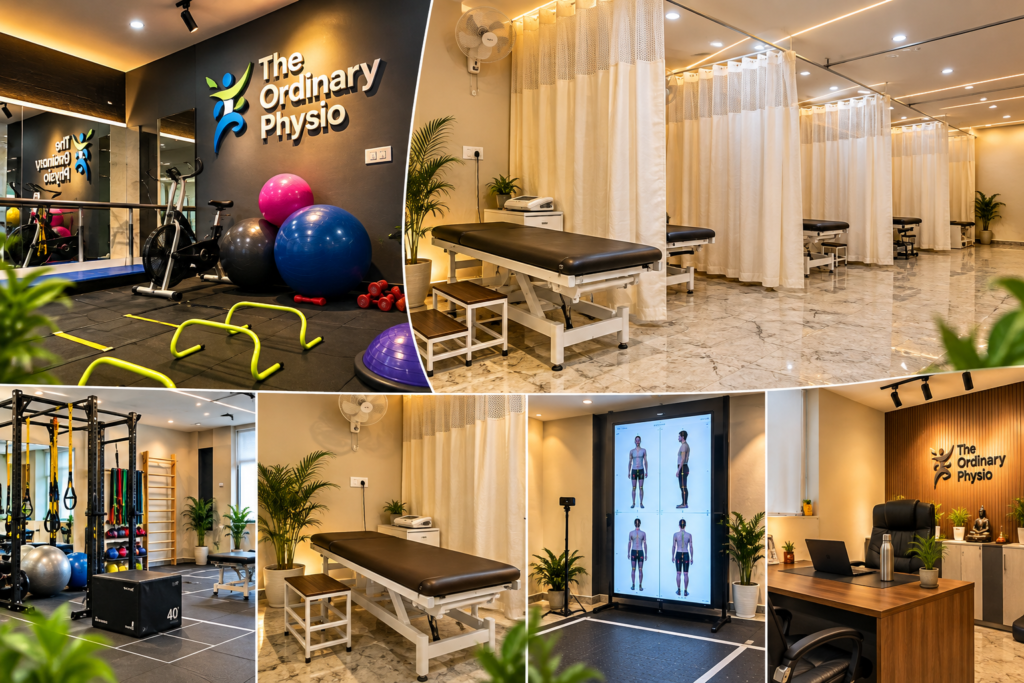
Physiotherapy center in Sector 104, Noida — services and facilities The Ordinary Physio sits in Sector 104, close to Hajipur and a short drive from Jaypee Hospital and Sector 81 metro station. We built the clinic around one idea: physiotherapy works best when it starts with real assessment, not a generic set of exercises handed to every patient who walks through the door. Inside the clinic The space is split into three areas, each built for a different stage of treatment. The rehabilitation hall has Swiss balls, plyo boxes, resistance bands, a wall ladder, parallel bars, and a BOSU trainer — the equipment used once a patient has moved past the acute pain stage into strengthening and functional training. The therapy room covers hands-on treatment: electrotherapy machines, a traction bed, dry needling, cupping, and manual therapy tools. And then there’s the posture lab — a dedicated space with a measured posture grid, where we run TOP MAP, our movement and posture assessment protocol, before deciding on any treatment plan. We also keep a hot pack setup with a hydrocollator and a wax bath for patients who need it as part of their pain management, alongside standard clinical tools like a goniometer and reflex hammer for proper diagnostic measurement. Conditions we treat Most of what walks through our door falls into a handful of categories: lower back pain, shoulder pain and rotator cuff injuries, knee pain — including chondromalacia patellae and ligament issues — heel pain, and general stiffness from desk jobs or sedentary routines. We also see a fair number of ACL tears, both post-operative reconstruction cases and grade 1 or grade 2 tears being managed without surgery, along with meniscus injuries. Beyond musculoskeletal conditions, we treat neurological cases like stroke recovery and balance disorders, geriatric patients working on mobility and fall prevention, and women’s health concerns including postnatal recovery and pelvic floor rehabilitation. Every patient starts with the same thing regardless of condition: an assessment first, a plan second. If you’re near Sector 100, 101, 105, 107, or anywhere along the Noida-Greater Noida Expressway, we’re close enough that consistent visits — which recovery actually depends on — aren’t a logistical headache. Areas we serve near Sector 104, Noida: Sector 100, Sector 101, Sector 102, Sector 105, Sector 107, Sector 108, Sector 82, Sector 93, Hajipur, near Jaypee Hospital, near Sector 81 Metro Station. Related reading: Back pain physiotherapy in Noida · What is TOP MAP? · Knee pain physiotherapy near me

Uncategorized

Home physiotherapy near me in Sector 104 — when you can’t travel to a clinic

Home physiotherapy near me in Sector 104 — when you can’t travel to a clinic Not everyone who needs physiotherapy can get to a clinic. An elderly parent recovering from a hip fracture, a patient three days out of knee replacement surgery, someone with a neurological condition that makes travel exhausting — for these patients, the clinic has to come to them. That’s what home physiotherapy is built for. Who actually benefits from home-based physiotherapy Post-operative patients are the most common case. After joint replacement or spine surgery, the first one to two weeks often involve pain, limited mobility, and a real risk of falling if someone tries to travel too soon. Starting rehabilitation at home during this window, then transitioning to clinic visits once mobility improves, tends to produce better outcomes than either skipping early therapy or forcing a risky commute. Elderly patients managing balance issues, arthritis, or general frailty are another group. For them, home physiotherapy isn’t a convenience — it’s often the only realistic option, since a fall on the way to a clinic can undo months of progress. Stroke and neurological patients fall into this category too. Early-stage neuro-rehabilitation frequently needs to happen in the patient’s own home, where therapists can also assess how someone manages stairs, bathrooms, and daily tasks in the actual environment they live in. What a home physiotherapy session actually includes A home visit from The Ordinary Physio isn’t a scaled-down version of a clinic session — it covers the same ground. Our therapists bring portable assessment tools, resistance equipment, and whatever’s needed for your specific condition, whether that’s gait training after a stroke or strengthening work after a fracture. We also use the visit to look at your actual living space — stair access, bathroom layout, where fall risks might exist — and adjust the plan accordingly. That’s something a clinic visit alone can’t replicate. If you’re near ATS One Hamlet, the societies around Hajipur, or anywhere within the Sector 100–108 stretch of Noida, we can usually reach you within the same day or next day, depending on scheduling. As your mobility improves, many patients transition to in-clinic sessions, where we have access to our full rehabilitation setup, including the posture analysis lab.  Areas we serve near Sector 104, Noida: Sector 100, Sector 101, Sector 102, Sector 105, Sector 107, Sector 108, Sector 82, Sector 93, Hajipur, near Jaypee Hospital, near Sector 81 Metro Station. Related reading: Best physiotherapist near me in Sector 104 · ACL tear physiotherapy — recovery with or without surgery · Physiotherapy cost in Noida — what to expect

Uncategorized

Physiotherapy clinic near me in Noida — a complete guide

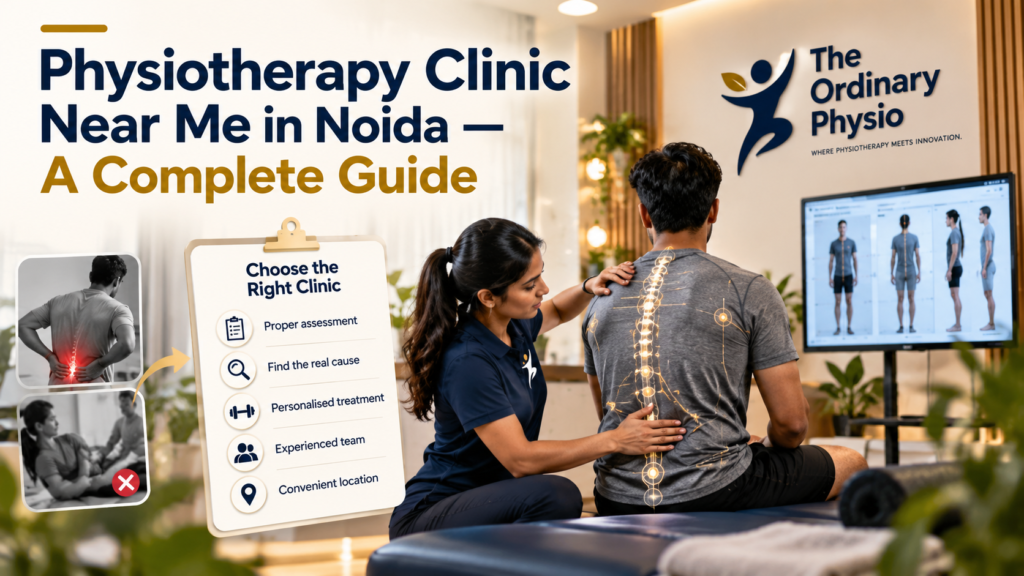
Physiotherapy clinic near me in Noida — a complete guide Searching “physiotherapy clinic near me” usually means one of two things: you’re dealing with pain right now and want relief fast, or you’ve been told by a doctor to start physiotherapy and have no idea where to begin. Either way, the clinics listed in your search results rarely tell you what actually separates a good one from a mediocre one. Here’s what to actually look for. How to choose the right physiotherapy clinic Start with whether the clinic does a real assessment before treatment. A lot of clinics in Noida run on volume — fifteen-minute slots, the same set of exercises handed to every patient, no real diagnosis of why the pain started in the first place. That approach might ease symptoms temporarily, but it rarely fixes the underlying cause, which means the pain tends to come back within a few months. Ask what the clinic actually does in a first session. If the answer is “we’ll start with some exercises,” that’s a red flag. A proper evaluation looks at posture, movement patterns, strength, and range of motion before deciding on treatment — not after. Qualifications matter too, though not in the way people assume. A physiotherapist’s degree tells you they’re licensed; it doesn’t tell you whether they specialise in the condition you have. Someone excellent at treating sports injuries isn’t automatically the right fit for post-stroke rehabilitation. Ask directly what conditions the clinic sees most often. Why assessment comes before treatment, not after At The Ordinary Physio, every new patient goes through TOP MAP — our structured movement and posture assessment — before we decide on a treatment plan. We’ve seen patients come in for shoulder pain where the actual driver was a stiff thoracic spine, and knee pain cases where the real issue traced back to hip weakness. Treating the symptom without finding that root cause usually means short-term relief and a repeat visit a few weeks later. This matters more in a city like Noida, where a lot of pain complaints stem from the same root causes — long commutes, desk jobs, poor posture habits built up over years. A clinic that treats everyone the same way misses that context. One that starts with a real assessment catches it. If you’re based around Sector 104, Sector 107, Sector 100, or the stretch near Jaypee Hospital and Sector 81 metro, that’s exactly where we are — close enough that consistent visits don’t become a burden on your week. Areas we serve near Sector 104, Noida: Sector 100, Sector 101, Sector 102, Sector 105, Sector 107, Sector 108, Sector 82, Sector 93, Hajipur, near Jaypee Hospital, near Sector 81 Metro Station. Related reading: Best physiotherapist near me in Sector 104 · Physiotherapy center in Sector 104 — services and facilities · How many sessions do you actually need?

Uncategorized

Best physiotherapist near me in Sector 104, Noida — The Ordinary Physio

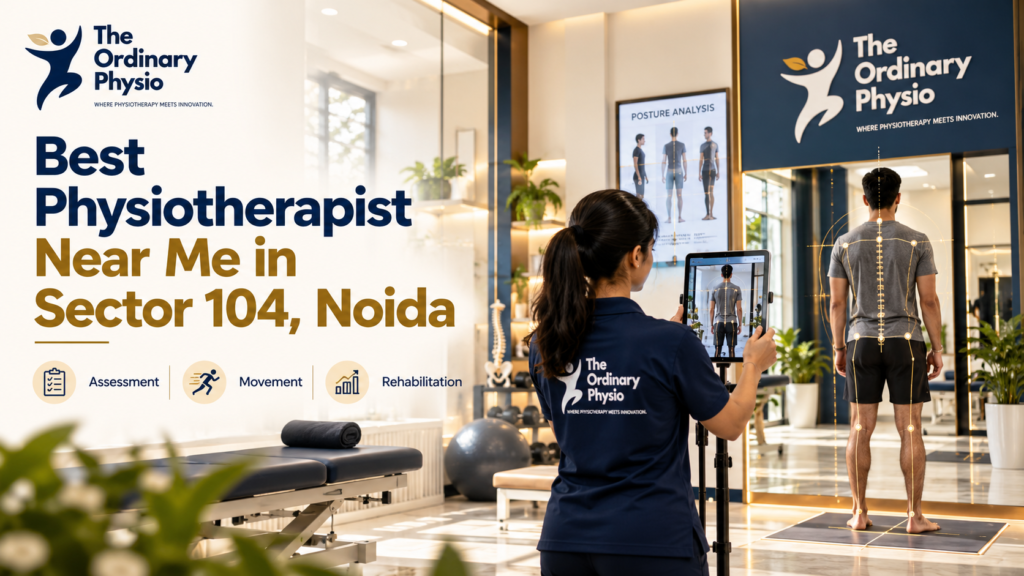
Best physiotherapist near me in Sector 104, Noida- The Ordinary Physio If you’ve typed “physiotherapist near me” into Google while sitting with a stiff neck or a knee that won’t bend right, you already know the problem with most results — a list of clinics with no way to tell which one actually knows what they’re doing. At The Ordinary Physio in Sector 104, we’d rather you make that decision with real information than a star rating alone. Why location actually matters for recovery Physiotherapy isn’t a one-visit fix. Most conditions — a rotator cuff strain, a stubborn lower back, post-surgical stiffness — need consistent sessions over two to six weeks to actually change. If your clinic is a 25-minute drive away, you’ll skip sessions when work gets busy, and skipped sessions are the single biggest reason physiotherapy plans stall out. A clinic within Sector 104, walking or a short ride from ATS One Hamlet, Chauhan Apartments, or the societies around Hajipur, removes that excuse entirely. There’s also a practical side to proximity: patients recovering from knee surgery or managing balance issues shouldn’t be driving themselves anywhere. Being close enough for a family member to drop you off in ten minutes changes whether you show up consistently. What to actually expect in your first visit A good first session isn’t a quick look and a hot pack. At The Ordinary Physio, it starts with TOP MAP — our posture and movement analysis protocol — before any treatment begins. We scan how you move, where the compensation patterns are, and what’s actually driving the pain, rather than guessing from the symptom alone. A patient with knee pain, for instance, often has the real problem sitting in the hip or ankle, and you won’t catch that without a proper assessment. From there, you get a plan built around your condition and your life — not a generic exercise sheet copied for every patient who walks in with “back pain.” We also offer home visits for patients who genuinely can’t travel, a female physiotherapist for those who prefer one, and a ground-floor clinic with parking, since recovery shouldn’t come with extra obstacles. If you’re searching for a physiotherapist near Sector 104, Sector 100, Sector 101, Sector 105, or anywhere along the Noida-Greater Noida Expressway corridor, we’re a short drive from Sector 81 metro station and close to Jaypee Hospital. Book an assessment, and you’ll know within one visit whether we’re the right fit for what you’re dealing with. Areas we serve near Sector 104, Noida: Sector 100, Sector 101, Sector 102, Sector 105, Sector 107, Sector 108, Sector 82, Sector 93, Hajipur, near Jaypee Hospital, near Sector 81 Metro Station. Related reading: Physiotherapy clinic near me — a complete guide · What is TOP MAP? · Home physiotherapy near me in Sector 104

Physiotherapist treating frozen shoulder with shoulder mobilization exercises at The Ordinary Physio, Sector 104 Noida
Uncategorized

Best Physiotherapy Treatment for Frozen Shoulder in Noida Sector 104 — The Ordinary Physio

Best Physiotherapy treatment for Frozen Shoulder in Noida Sector 104 — the ordinary physio.  Frozen shoulder | Adhesive capsulitis | Shoulder stiffness | Shoulder pain. Adults in Noida with shoulder stiffness and restricted movement Searching for the best physiotherapy clinic for frozen shoulder in Noida? Adhesive capsulitis is one of the most frustrating and mismanaged conditions we see at The Ordinary Physio in Sector 104. Patients from ATS One Hamlet, County 107, Sector 107, Prateek edifies, and Lotus 300, Sector 47, Sector 100, Sector 99 arrive having been told to ‘wait for it to resolve on its own’ — sometimes for over a year. Structured physiotherapy at the right stage shortens that timeline meaningfully. What frozen shoulder actually is? Adhesive capsulitis is an inflammatory fibrosis of the glenohumeral joint capsule. The capsule thickens, scars internally, and restricts movement — particularly external rotation and abduction. The natural history runs through three stages: freezing (painful, stiffness developing), frozen (less pain, severe restriction — can’t lift the arm above shoulder height), and thawing (range gradually returning). Without intervention, this cycle takes eighteen to twenty-four months. Structured physiotherapy shortens the frozen and thawing stages significantly. It is more common in people with diabetes, in women between forty and sixty, and following a period of shoulder immobility. We see it regularly in residents of Sector 75, Sector 76, Sector 78, Mahagun Moderne, and Logix Blossom County — often after an unrelated event: a minor fall, a sling for a different injury, or after COVID-19 illness. Why aggressive stretching in the freezing stage makes it worse This is the most common treatment error we see in patients presenting from other clinics. In the active freezing stage — when the shoulder is acutely inflamed and painful — aggressive stretching provokes the capsule further and accelerates the fibrotic process. The freezing stage requires a pain-modulation approach: gentle movement within pain-free range, anti-inflammatory adjuncts if appropriate, and patient education about what to expect. Patients who were stretched aggressively in this stage by another clinician often arrive at The Ordinary Physio with a more severely contracted capsule than they would have had with watchful waiting alone. What works: manual therapy plus exercise In the frozen and thawing stages, structured manual therapy — specifically inferior and posterior glenohumeral joint mobilisations — combined with graded active-assisted range-of-motion exercises outperforms exercise alone. This is supported by the 2020 Cochrane review on shoulder disorders, which found that manual therapy plus exercise produced better outcomes for adhesive capsulitis than either intervention alone. At The Ordinary Physio, we apply phase-appropriate treatment. The intervention we use in month two of the freezing stage is different from what we use in month eight of the frozen stage. This sounds obvious. It is not standard practice at most physiotherapy clinics in Noida — where a frozen shoulder often gets the same heat-and-exercise protocol regardless of stage. Realistic timelines with structured treatment Patients arriving at The Ordinary Physio in the frozen or early thawing phase — from Sector 104, Sector 107, Sector 108, Gaur City 2, Noida Extension, and Pari Chowk — typically gain functional range within three to five months of structured treatment. Full resolution takes longer. But the period of severe restriction is shortened, and patients return to daily activities — driving, dressing, sleeping on the affected side — much sooner. best physiotherapy for frozen shoulder Noida   |   frozen shoulder treatment physiotherapy Noida Sector 104   |   adhesive capsulitis physiotherapy Noida | shoulder pain physiotherapy Noida   |   best physiotherapist for frozen shoulder Noida NCR   |   frozen shoulder clinic near me Noida | physiotherapy near me Noida   |   physiotherapist near me Sector 104   |   physio clinic near me Noida Expressway | frozen shoulder treatment without surgery Noida   |   shoulder stiffness physiotherapy Noida   |   shoulder can’t lift arm physio Noida | shoulder pain at night physiotherapy Noida   |   shoulder mobilisation therapy Noida   |   adhesive capsulitis stage treatment Noida | frozen shoulder diabetes physiotherapy Noida  frozen shoulder physio near ATS One Hamlet Sector 104   |   shoulder pain treatment near Sapphire Tower Sector 104   |   frozen shoulder near Mahagun Medalleo Sector 107 | shoulder physio near Mahagun Moderne Sector 78   |   frozen shoulder clinic near Supertech Capetown Sector 74   |   shoulder stiffness physio near Gaur City Greater Noida West frozen shoulder treatment near Logix Blossom County Sector 137   |   shoulder pain clinic near Pari Chowk Greater Noida   |   frozen shoulder near Noida Extension shoulder physio near Amrapali Silicon City Sector 76 | frozen shoulder physiotherapy Sector 75 Noida   |   shoulder pain physio Sector 76 Noida   |   frozen shoulder clinic Sector 78 Noida | shoulder physiotherapy Sector 104 Noida   |   shoulder stiffness physio Sector 107 Noida   |   adhesive capsulitis physio Greater Noida West | how long does frozen shoulder last with physiotherapy Noida   |   frozen shoulder physiotherapy or injection Noida   |   frozen shoulder exercises Noida physiotherapy | frozen shoulder stage 2 treatment Noida   |   can physiotherapy cure frozen shoulder Noida

Uncategorized

Physiotherapy Consultation in Noida | What to Expect | The Ordinary Physio Sector 104

What Happens at Your First Physiotherapy Assessment — And Why It Matters Introduction: The First Question Most Noida Patients Ask “What actually happens at a physiotherapy appointment?” It is one of the most common questions we receive at The Ordinary Physio, our physiotherapy clinic in Sector 104, Noida. Patients searching for physiotherapy near me in Noida, or booking a physiotherapy consultation for the first time, often arrive uncertain about what to expect. Some have been to physiotherapy clinics before — and left feeling like the appointment was too short to be meaningful. Some have had 15-minute sessions of heat and ultrasound and wondered if that was all physiotherapy had to offer. It is not. A proper physiotherapy consultation — the kind that leads to accurate diagnosis and a rehabilitation programme that actually resolves your problem — takes time, clinical skill, and a structured approach. This article explains exactly what happens at The Ordinary Physio, why each component of the assessment matters, and what makes our physiotherapy consultation in Noida different from a standard short-visit clinic. What Is a Physiotherapy Consultation? A physiotherapy consultation is a structured clinical assessment conducted by a qualified physiotherapist to identify the source and cause of your musculoskeletal problem, understand how it affects your function and daily life, and design a rehabilitation plan to resolve it. The key word is consultation — not treatment. The purpose of the first appointment at a physiotherapy clinic in Noida is not primarily to treat. It is to understand. A physiotherapist who treats before they understand is guessing. At The Ordinary Physio in Sector 104, we do not guess. The World Health Organisation (WHO) defines physiotherapy as the science of using physical methods — exercise, manual therapy, electrotherapy, and education — to rehabilitate function impaired by injury, disease, or ageing. The starting point of that science is accurate assessment. What We Assess in a Physiotherapy Consultation at The Ordinary Physio, Noida 1. Detailed Subjective History (15–20 Minutes) 2. Biomechanical and Postural Observation 3. Active Range of Motion Testing 4. Joint and Soft Tissue Palpation 5. Neurological Screening 6. Functional Movement Analysis 7. Special Tests and Clinical Diagnosis What Comes Out of Your Physiotherapy Consultation at The Ordinary Physio At the end of your first appointment at our physiotherapy clinic in Sector 104, Noida, you will receive:  A Clinical Diagnosis — Not “back pain” or “shoulder problem,” but a specific clinical explanation: the structures involved, the mechanical drivers, the contributing factors, and the patterns we identified. An Honest Prognosis — How long realistic recovery is likely to take, what the recovery trajectory typically looks like, and any factors that may influence this. A Written Programme Outline — The phase-wise rehabilitation plan, what the treatment will involve, how many sessions we anticipate, and what you will be doing between sessions. Immediate Management Advice — What to do (and not do) before your next session: specific exercises, activity modifications, and ergonomic advice where relevant. Referral Where Indicated — If your assessment reveals findings that require imaging, specialist review, or a different clinical pathway, we will tell you clearly and help you navigate next steps. Honest clinical practice sometimes means saying “this is outside our scope — you need to see a surgeon/neurologist/rheumatologist first.” How Long Does a Physiotherapy Consultation Take in Noida? At The Ordinary Physio, our initial physiotherapy consultation takes 45 to 60 minutes. This is significantly longer than many physiotherapy clinics in Noida, and deliberately so. A 15-minute appointment does not allow adequate time for a thorough subjective history, complete physical examination, clinical reasoning, and communication of findings. Abbreviated assessments produce abbreviated diagnoses — and incomplete diagnoses produce treatment that misses the target. If you have been to a physiotherapy clinic near me in Noida and felt that the consultation was too brief to be meaningful, that experience has a clinical reason and a clinical consequence. Our 45–60 minute initial assessment is the minimum time required to do this properly. FAQ Find Out Answers Here Q: What should I wear to a physiotherapy consultation? Comfortable, loose clothing that allows access to the area of complaint. For lower limb problems — shorts. For back or neck problems — something that allows you to easily remove a top layer. You do not need special clothing; just something practical. Q: Do I need a doctor’s referral to see a physiotherapist in Noida? No. Physiotherapists in India are autonomous healthcare professionals. You can book a physiotherapy consultation directly, without a GP or specialist referral. If you have relevant investigation reports (X-rays, MRI, surgical notes), bring them — they add clinical context, though they are not required. Q: Will you do treatment in the first session? Where time and the clinical assessment allow, yes. In many cases, we begin Phase 1 treatment within the first session — joint mobilisation, soft tissue work, or specific early-phase exercise. The assessment takes priority; treatment begins within it where appropriate. Q: How do I know if I need physiotherapy or a surgeon? This is a question your physiotherapist should answer honestly after assessment. For the vast majority of musculoskeletal conditions, physiotherapy is the appropriate first-line management. Surgical indications are specific and limited. We will tell you clearly which category your presentation falls into. Q: I’m in Sector 108 / Greater Noida West / Gaur City. How do I get to your clinic? The Ordinary Physio is located on the ground floor in Sector 104, Noida — on the Noida-Greater Noida Expressway corridor. Ground floor access, wheelchair friendly, parking adjacent. Accessible from Sector 93, 100, 104, 105, 108, 110, 137, and Greater Noida West in 10–25 minutes depending on your starting point. Q: How much does a physiotherapy consultation cost in Noida? Contact us directly or WhatsApp us for current pricing. We offer transparent session fees with no hidden charges. physiotherapy consultation Noida | physiotherapy assessment Noida | physiotherapist in Noida | best physiotherapy clinic Noida | physiotherapy Sector 104 Noida | physiotherapy near me Noida | clinical physiotherapy evaluation Noida | biomechanical assessment Noida | musculoskeletal

© 2026 The Ordinary Physio. All Rights Reserved.


Scroll to Top